Key takeaways
- Rebuilding code without changing design preserves 100% of established Google rankings and customer familiarity.
- Follow a rigorous 5-step migration protocol with 1:1 301 redirect mapping to prevent traffic drops.
- Proactive monthly maintenance protects your site against database bloat, plugin conflicts, and unexpected downtime.
How to modernize legacy WordPress architecture, eliminate technical debt, and achieve 90+ speed scores without breaking existing Google rankings or customer workflows.
The Redesign Trap: Why 60% of Website Redesigns Accidentally Destroy Organic Rankings
It is an all-too-common horror story in digital marketing: a business spends $10,000 on a gorgeous visual redesign, launches the new website, and within 30 days their organic Google impressions and keyword rankings plummet by 50% or more. Design agencies excel at visual aesthetics, but they frequently alter URL permalinks, eliminate keyword-rich content, drop essential H1-H3 heading hierarchies, or break canonical tags without implementing proper 301 redirect mappings. For an established website earning organic traffic, a reckless visual redesign is one of the highest financial risks a company can take.
- Broken Permalink Structures: Modifying /service/wordpress-development to /services/wp/ without 301 redirects instantly resets Google PageRank to zero.
- Content Cannibalization & Thinning: Condensing multi-paragraph informational pages into visual card carousels removes the semantic text Google relies on to rank.
- Loss of Structured Data Schema: Dropping established JSON-LD Service, Breadcrumb, and Organization schemas strips your rich search results.
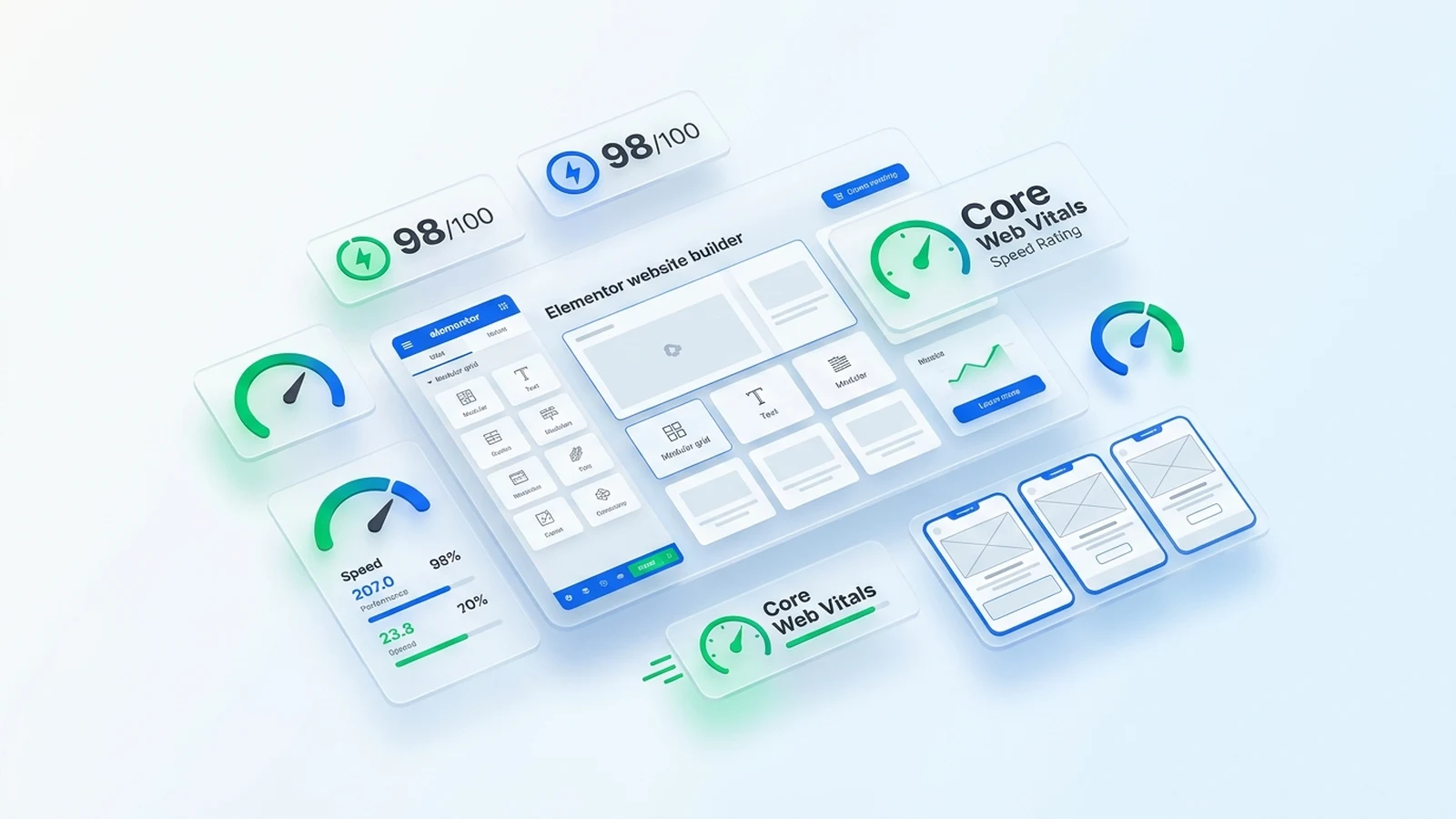
- Regression in Mobile Core Web Vitals: Heavy animations and unoptimized third-party sliders introduced by designers can cause mobile LCP to exceed 4 seconds.
Rebuild Without Redesign: The Smartest Alternative for Established Websites
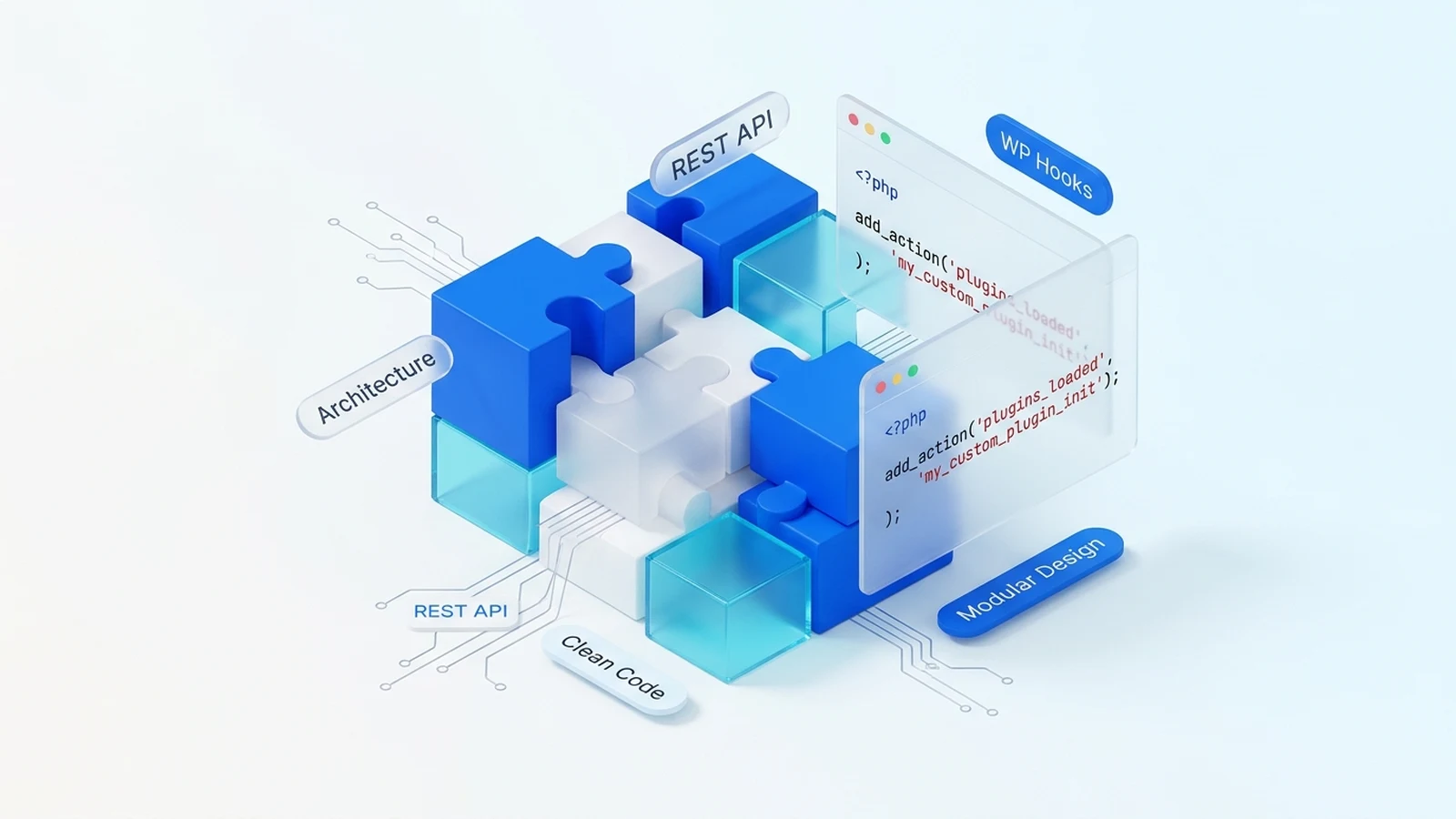
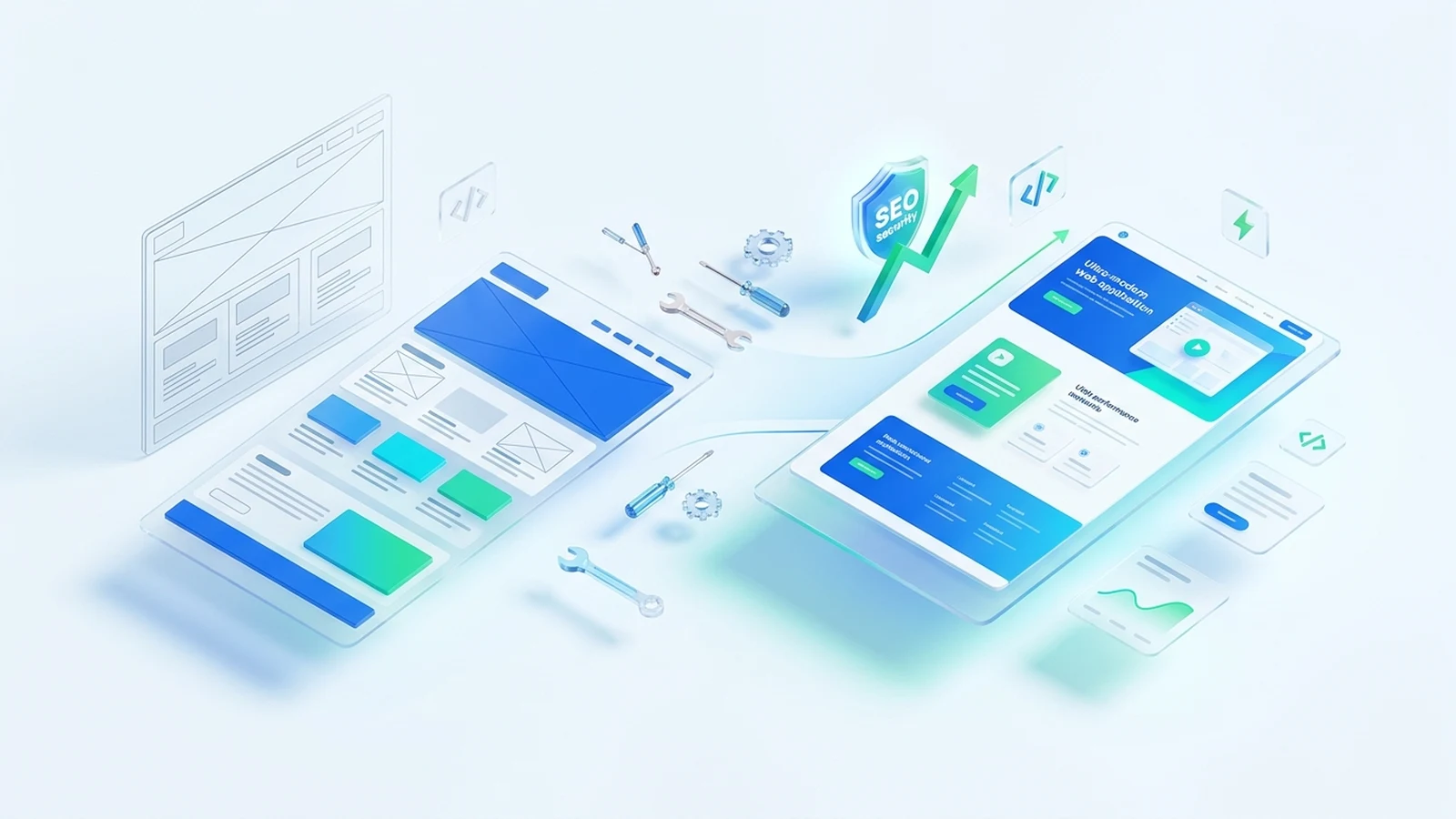
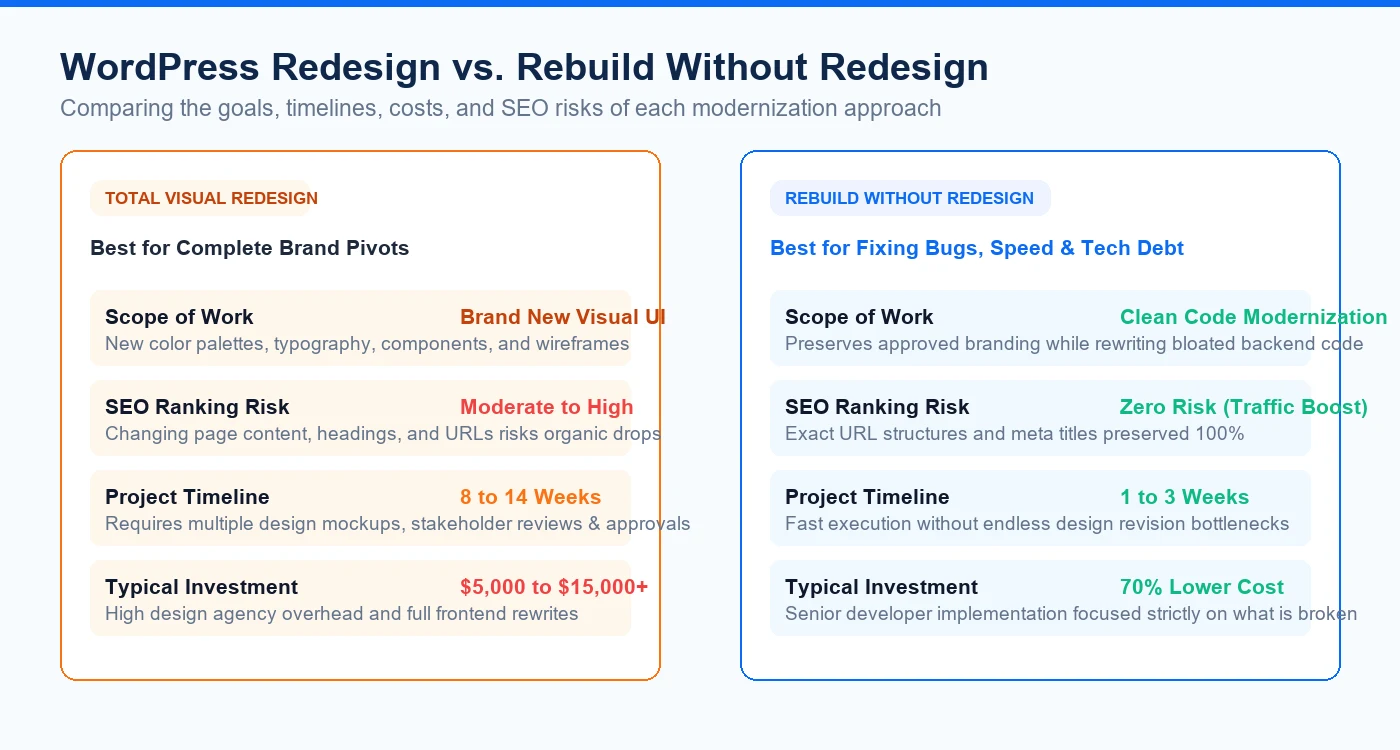
When business owners complain that their website is slow, buggy, or frustrating to edit, the root issue is rarely the visual design—it is accumulated technical debt. Over 4 to 6 years, a WordPress site accumulates abandoned plugins, deprecated shortcodes, bloated page builder wrapper divs, and unindexed database tables. A 'rebuild without redesign' (technical redevelopment) preserves your approved branding, customer-familiar layouts, and high-ranking SEO URLs while completely replacing the underlying engine with clean, lightweight modern architecture.
- 100% Organic Ranking Preservation: Exact URL permalinks, meta titles, descriptions, and heading tags remain perfectly intact.
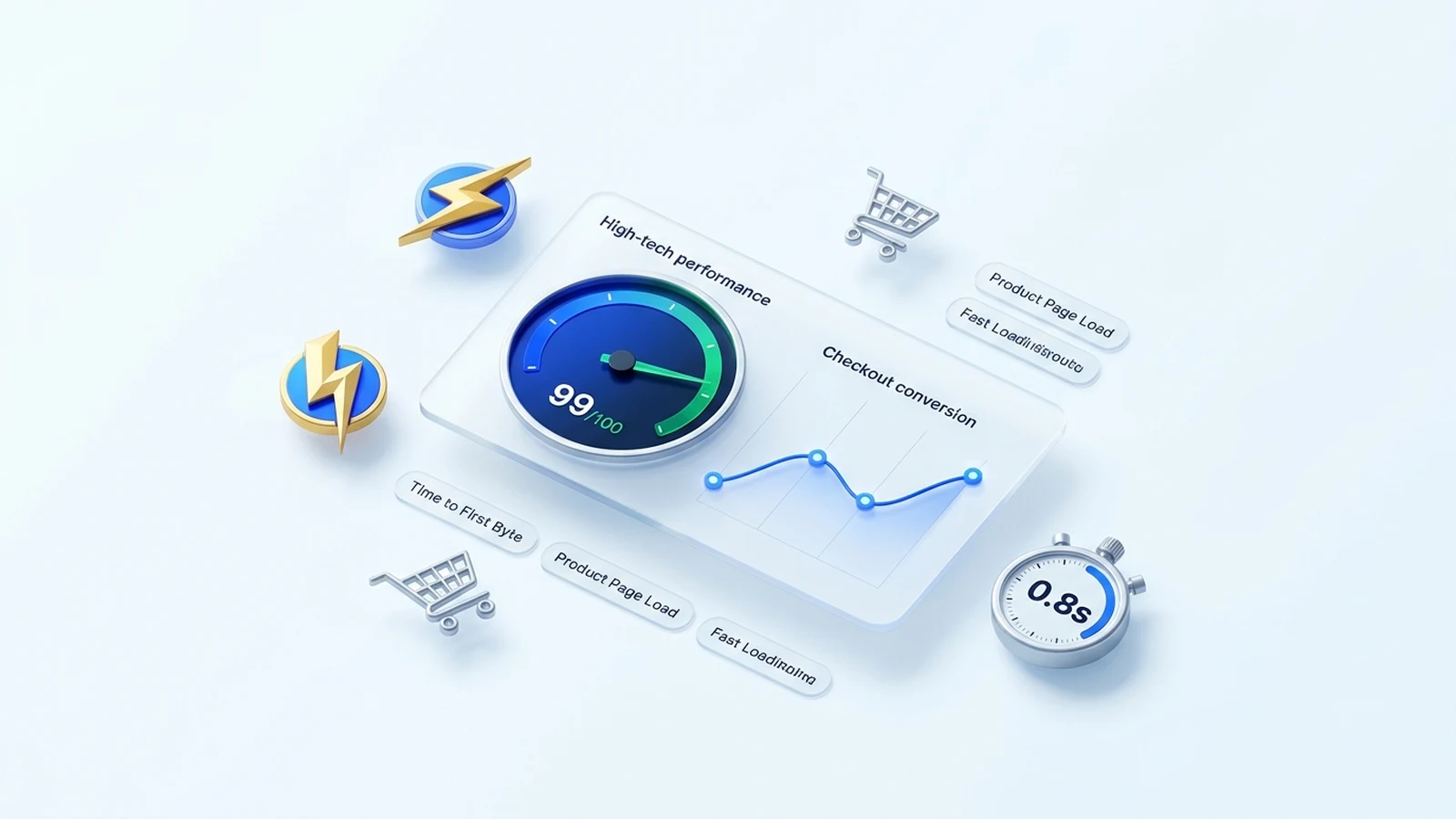
- Dramatic Speed Boost: Replacing bloated themes and 45 plugins with clean custom templates cuts load times from 5s down to under 0.9s.
- Seamless Customer Familiarity: Existing clients experience zero confusion or cognitive friction because visual navigation remains intuitive.
- 70% Lower Cost & Faster Delivery: Redevelopment takes 2 to 3 weeks compared to 3 to 4 months of stressful agency design committee rounds.
The 5-Step SEO-Safe Redevelopment & Migration Protocol
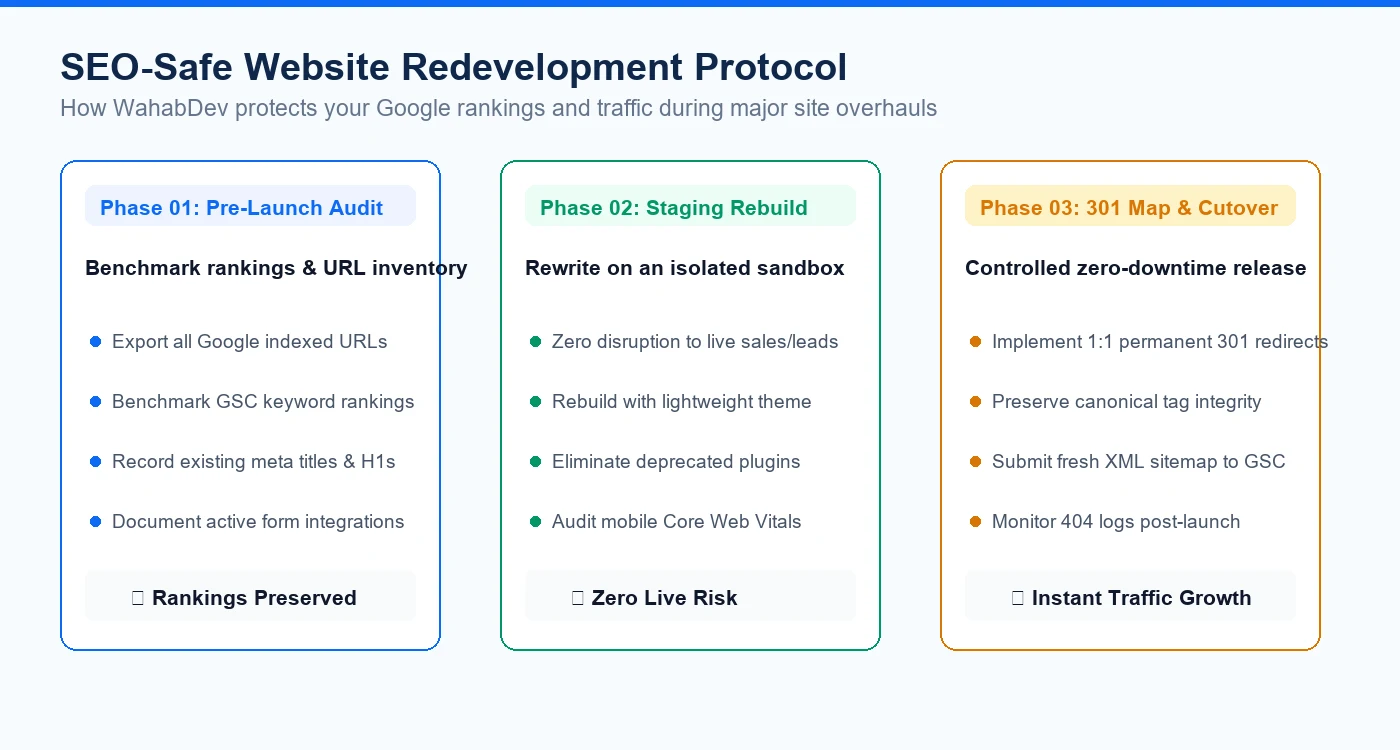
When a modernization project requires updating both code and content structure, professional developers adhere to a strict zero-downtime migration protocol. Never perform major overhauls directly on a production server where a fatal error could disrupt active customer enquiries or sales.
- Crawling & URL Benchmarking: Use automated crawlers to catalog all published URLs, HTTP response codes, internal links, and current GSC ranking positions.
- Staging-First Development: Rebuild and test the entire codebase on an isolated password-protected staging subdomain with identical PHP 8.2+ settings.
- 1-to-1 301 Redirect Mapping: If any slug must change, generate an exhaustive server-level rewrite map in .htaccess to route old URLs permanently.
- Mobile Regression & CWV Testing: Audit every responsive breakpoint on physical mobile devices and verify LCP <= 2.5s and CLS <= 0.05 on staging.
- Controlled Cutover & GSC Re-index: Deploy during low-traffic windows, verify SSL certificate and canonical tags, and submit an updated XML sitemap to Google Search Console.
Proactive Website Maintenance: Preventing Future Technical Debt
A modernized website is not a 'set-and-forget' asset. Without regular technical hygiene, plugin updates introduce regressions, database logs balloon, and PHP security patches fall behind. A dedicated monthly maintenance retainer protects your investment through weekly database optimization, safe staging updates, continuous uptime monitoring, and quarterly Core Web Vitals audits.
- Automated Off-Site Backups: Storing encrypted daily database and weekly filesystem backups independently of your primary web host.
- Staging-Validated Updates: Testing WordPress core, theme, and plugin updates in a sandbox before deploying them to live production.
- Database Health Maintenance: Purging orphaned post revisions, transients, and spam comments monthly to keep SQL query times under 40ms.
- PHP & Security Hardening: Keeping PHP runtime at version 8.2+, applying CSP security headers, and enforcing two-factor authentication.
Have something like this in mind?
Good development starts with understanding the site, the people using it and the decisions that matter after launch.
Discuss a website rebuild or maintenance